Champagne France's Four Growing Areas, Zone by Zone
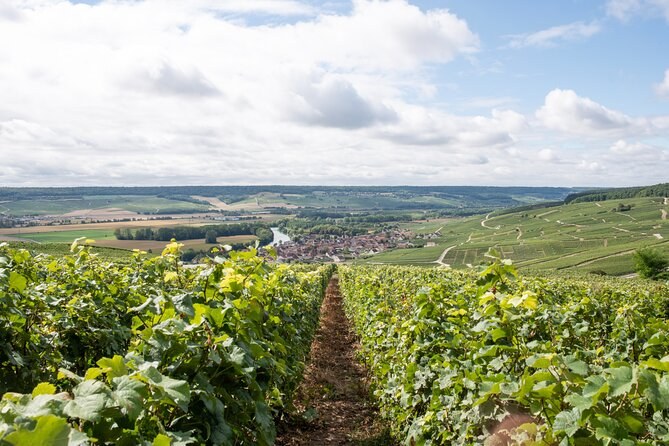
The short answer. Champagne's vines grow on about 34,300 hectares across 319 villages, in four main areas. The Montagne de Reims leans to Pinot Noir, the Vallée de la Marne to Meunier, the Côte des Blancs to Chardonnay, and the Côte des Bar to Pinot Noir. The tours from Reims and Épernay work the first three; none of them goes to the Côte des Bar.
The four areas side by side
The figures come from the Union des Maisons de Champagne, which publishes the area of vines, the number of villages and the share of each grape for every area. Read across a row and you can guess the style of the wine before you taste it.
| Area | Villages | Hectares | Leading grape | Grape shares |
|---|---|---|---|---|
| Montagne de Reims | 94 | 7,966 | Pinot Noir | 41% Pinot Noir, 33% Meunier, 26% Chardonnay |
| Vallée de la Marne | 103 | 12,150 | Meunier | 59% Meunier, 23% Pinot Noir, 18% Chardonnay |
| Côte des Blancs | 58 | 6,304 | Chardonnay | 85% Chardonnay, 8% Meunier, 7% Pinot Noir |
| Côte des Bar | 64 | 7,898 | Pinot Noir | 84% Pinot Noir, 12% Chardonnay, 3% Meunier |
Across the whole appellation the three grapes come out almost even: 38% Pinot Noir, 31% Chardonnay and 31% Meunier. The balance only tips when you look area by area.
One wine, 281,000 plots
A law of 1927 fixed the boundary of the production zone. Inside it, the vines are split into some 281,000 plots, each of about 12 ares, a little under a third of an acre. They are planted between 90 and 300 metres up, mostly on slopes that face south, south-east or east. The average gradient is 12%, and in places it reaches 60%. If you ride the champagne bike tours you will feel every one of those percentages, electric assist or not.
The Montagne de Reims
This is the high ground between Reims and Épernay: 94 villages and nearly 8,000 hectares, with Pinot Noir in the lead. You cross under it without noticing if you take the train between the two towns, because the line runs through a tunnel beneath it. The climate figures on the weather page come from a station at Mailly, up on its slopes.
Some Reims tours stop there. Uncork's private Veuve Clicquot day, for one, ends at a boutique producer in Rilly-la-Montagne. Ask your guide which village each grower farms, and you will start to hear the same names come back.
The Vallée de la Marne
The largest of the four, with 103 villages and over 12,000 hectares, takes its name from the river Marne, which flows through Épernay. Meunier leads here, on 59% of the vines. The hillsides above the river are where most tours spend their time: Hautvillers, Cumières, Aÿ and Mareuil-sur-Aÿ all appear in the itineraries. UNESCO listed the historic vineyards of Hautvillers, Aÿ and Mareuil-sur-Aÿ in 2015, with the houses and cellars of Reims and Épernay.
Hautvillers is the stop almost everyone makes. Dom Pérignon ran the estate of its abbey for 47 years and is buried in the village church of Saint-Sindulphe; the abbey buildings are private. Things to do in Reims and Épernay has the village's details.
The Côte des Blancs
Here Chardonnay covers 85% of the 6,304 hectares. A Blanc de Blancs is a champagne made only from white grapes, and those are almost always Chardonnay. Nicolas Feuillatte describes its home at Chouilly as "in the heart of the Côte des Blancs".
Two short formats from Épernay reach it. The jeep runs through Chouilly among other villages, and the private connoisseurs' half day passes Cramant and tastes at Oger. The Épernay champagne tours page lists every start in town.
The Côte des Bar
The fourth area is the odd one out: 64 villages and nearly 7,900 hectares, where 84% of the vines are Pinot Noir. None of the tours from Reims, Épernay or Paris goes there, so if you want it you will be driving yourself. Houses buy grapes as well as growing them, which is what NM on a label means, so a house's blend can draw on any of the four.
Can you see the growing areas without a tour?
Partly, if you use the trains and buses. The TER between Reims and Épernay, which the region calls the Ligne des Bulles, runs every 30 minutes and stops at four halts on the way: Rilly-la-Montagne, Germaine, Avenay-Val-d'Or and Aÿ-Champagne. You can step off in the Montagne de Reims or on the Marne without a car. From Épernay, local Mouvéo buses reach Dizy, Aÿ, Pierry, Moussy, Chouilly and Mardeuil, and you can hire a bike by the station.
From May to October the Épernay tourist office also books the Esprit de Champagne shuttles: eight seats, three a day, leaving from the office. What you will not get on your own is a grower's cellar opened for you; for that, you book a tour or call ahead.
Which areas each kind of tour reaches
- Grower half days from Reims: two growers the operator chooses, with Hautvillers on some afternoons.
- Full days from Reims: Hautvillers on most, Cumières or Rilly-la-Montagne on Uncork's days, and often the Avenue in Épernay.
- Short formats from Épernay: Hautvillers, Aÿ, Mareuil-sur-Aÿ and Chouilly by jeep or bus; Cramant and Oger on the connoisseurs' half day.
- Days from Paris: Reims and Épernay, with the producers named on the day.
For how the growers and the big houses split the region's bottles, read grand houses vs family growers. For the figures behind the wine, from the grapes in a bottle to the cellars under Épernay, see the champagne facts post. The houses' own cellar visits, and which villages they buy from, are on the champagne houses page. The Champagne map puts the four areas in place.
Tours that take you into the growing areas
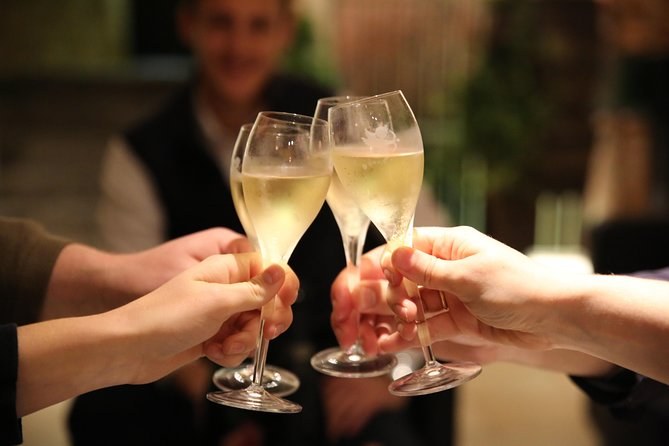
Small Group - Full Day Champagne Tour 3 Small Champagne Growers
Three family growers, lunch with a glass of champagne, Hautvillers and the Avenue de Champagne, from Reims station.
From $280 per person
Check Availability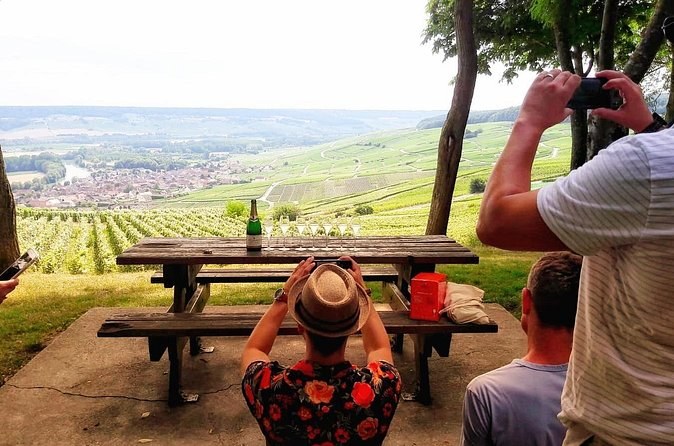
Exclusive Champagne Cellars & Dom Perignon Vineyards tour - Reims
Reims Cathedral at 9:30 am, two estates' cellars, Hautvillers and the hillsides, ending on the Avenue de Champagne near Épernay station.
From $245 per person
Check Availability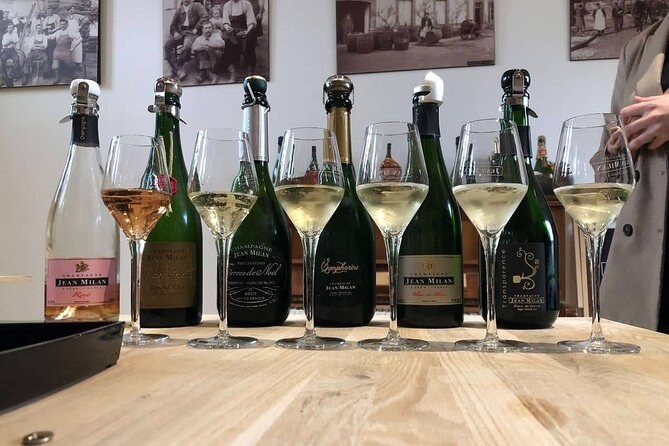
The Connoisseurs from Epernay (Private Half day Champagne Tour)
A private half day from Épernay: Hautvillers, the Côte des Blancs and six Grand Cru or Premier Cru champagnes.
From $333 per person
Check AvailabilityNext: See the harvest weeks and the house calendars on when to visit. Every fare sits side by side on Champagne France Tours.